
Medical integration for healthcare providers in Poland
LIS/HIS integration — test orders and results without manual re-entry
Connect your laboratory with hospital or clinic systems.
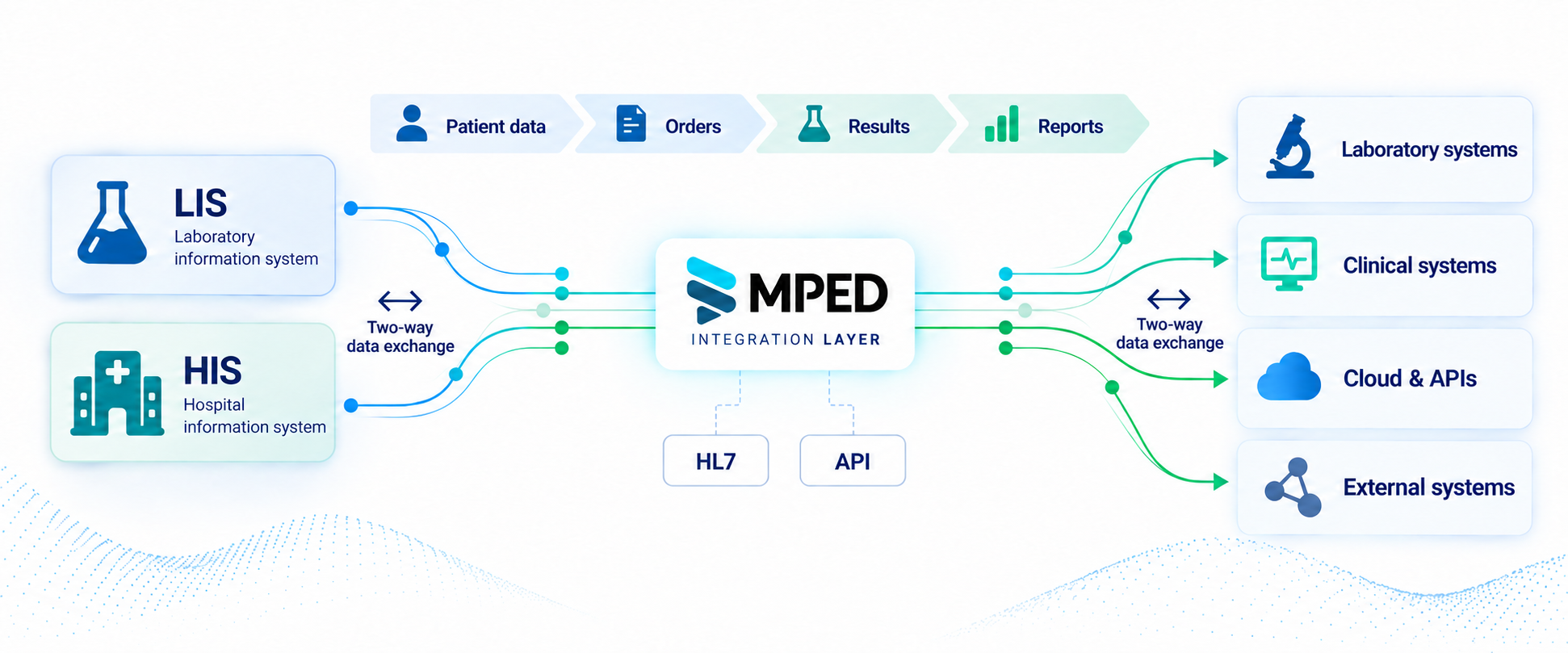
We design and implement the exchange of test orders, statuses and results between healthcare systems. We adapt the integration to your software and your team’s everyday work.
Who it is for: diagnostic laboratories, hospitals, clinics and healthcare networks working with one or more laboratories.
- Orders, statuses and results
- HL7 and APIs
- Experience from LIS/HIS delivery
Healthcare workflows
When orders and results get stuck between systems
Laboratories, hospitals and clinics may use different software. LIS/HIS integration organises data exchange between them and reduces manual handling.
Repeated data entry
Patient details, orders and results are entered manually into successive systems. This adds work for reception teams, laboratory staff and healthcare professionals.
Limited visibility of test status
The healthcare facility has to ask the laboratory whether an order arrived and when a result will be available. Sharing statuses helps teams coordinate their work.
Different dictionaries and identifiers
Test codes, units and order identifiers can differ between systems. Mapping and validation rules need to be agreed before data exchange starts.
Errors that are difficult to trace
With scattered connections, it is hard to see where information stopped. The workflow needs delivery monitoring and exception handling.
Integration scope
From a test order to a result in the clinical system
LIS means Laboratory Information System and HIS means Hospital Information System. We adapt the connection to the workflows of the laboratory and the healthcare facilities ordering tests.
Orders from HIS to LIS
Transfer test orders with the agreed patient and specimen details. Identifier checks help associate each order with the correct workflow.
Results from LIS to HIS
Automatically deliver validated results to the clinical system. We define how to handle partial and final results as well as subsequent corrections.
Statuses and acknowledgements
Exchange order acceptance and result availability information within the capabilities of both systems’ interfaces.
Patient Portal and devices
The project can extend to patient access to results or data intake from laboratory analysers. Each extension has its own scope and tests.
Healthcare systems in Poland
Integration around the systems you already use
We develop solutions for diagnostic laboratories, hospitals, clinics and healthcare networks in Poland. We start with the specific software versions, available interfaces and the way your team works.
KS-SOMED and other healthcare software
We can include KS-SOMED (Kamsoft) and other clinical systems after confirming documentation, access and any modules required by the vendor.
HL7 and APIs
We choose the data exchange approach to match system capabilities. We agree message structures, field mappings, test dictionaries and acknowledgement rules.
On-premises, cloud or hybrid environments
We agree where the integration runs with your IT team, taking infrastructure, connectivity, access rules and maintenance into account.
Data access and operational continuity
The design covers permissions, transport encryption, logging scope and interruption handling. Data processing arrangements are agreed with the healthcare facility and its security leads.
Working with MPED
From analysis to launch and ongoing support
Each stage has an agreed scope and acceptance criteria. We test both the expected data flow and situations that require intervention.
01. System and workflow analysis
We collect documentation, map the order and result journey, and agree responsibilities across the healthcare facility, laboratory and software providers.
02. Design and implementation
We prepare data mapping, validation, message routing and acknowledgements. We agree how duplicates, corrections and retries will be handled.
03. Testing and pilot
We validate scenarios with your team, including invalid data, connection interruptions and repeated messages. We then launch the agreed pilot scope.
04. Acceptance and support
We provide documentation and operating procedures. We agree monitoring, incident response and how changes will be tested after system updates.
MPED delivery experience
See how we connected laboratories with healthcare providers
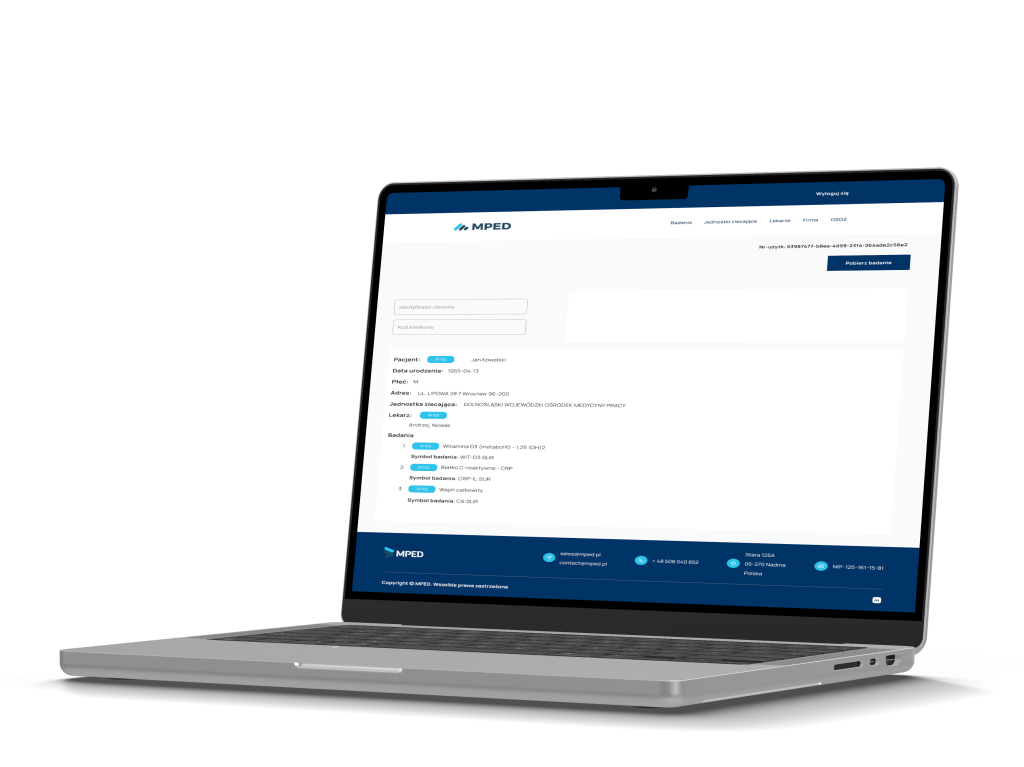
In this implementation, we delivered bidirectional LIS/HIS data exchange, with automatic result transfer and support for test orders.
- Integration across different software providers.
- Communication using HL7 and APIs.
- Reduced manual data entry.
Let’s discuss your environment
Which systems do you want to connect?
Prepare the names and versions of your LIS/HIS systems, the number of locations and a short outline of the order and result workflow. We will use this to establish what needs to be checked before proposing the integration scope and estimate.
FAQ
Questions before LIS/HIS implementation
Can you connect LIS/HIS from different providers?
Yes. We design integrations for environments using software from different vendors. Before providing an estimate, we check the specific systems, versions, interface documentation and access conditions. The scope depends on the capabilities of both systems and cooperation with their providers.
Can the scope include KS-SOMED and the Patient Portal?
Yes. We can include a connection to KS-SOMED (Kamsoft) and make results available through the Patient Portal. We first confirm the available APIs or other interfaces, required permissions and licences. LIS/HIS exchange, patient services and additional integrations each have an agreed scope.
Do we need to replace our current system?
We start by assessing how to connect the systems already in use. A technical review establishes whether the necessary interfaces are available or whether an additional module or update is needed. We use these findings to propose the implementation approach.
Do you support HL7 and API-based integrations?
Yes. We select HL7 messages or APIs based on system documentation and the agreed data workflow. The analysis also defines patient and order identification, mapping of tests, units and statuses, and the handling of corrected results.
How do you introduce the integration into a working healthcare facility?
We begin with agreed scenarios and testing outside production. We then plan a limited pilot, acceptance testing with the healthcare team and a phased expansion. We agree on monitoring, responsibility for errors and procedures for interruptions to data exchange.
What determines the cost and implementation time?
The main factors are the number of systems and locations, interface availability, workflow scope, documentation quality, and testing and support requirements. For an initial discussion, we need the system names and versions and an outline of the order and result workflow. After analysis, we prepare the scope, stages and estimate.
Related solutions